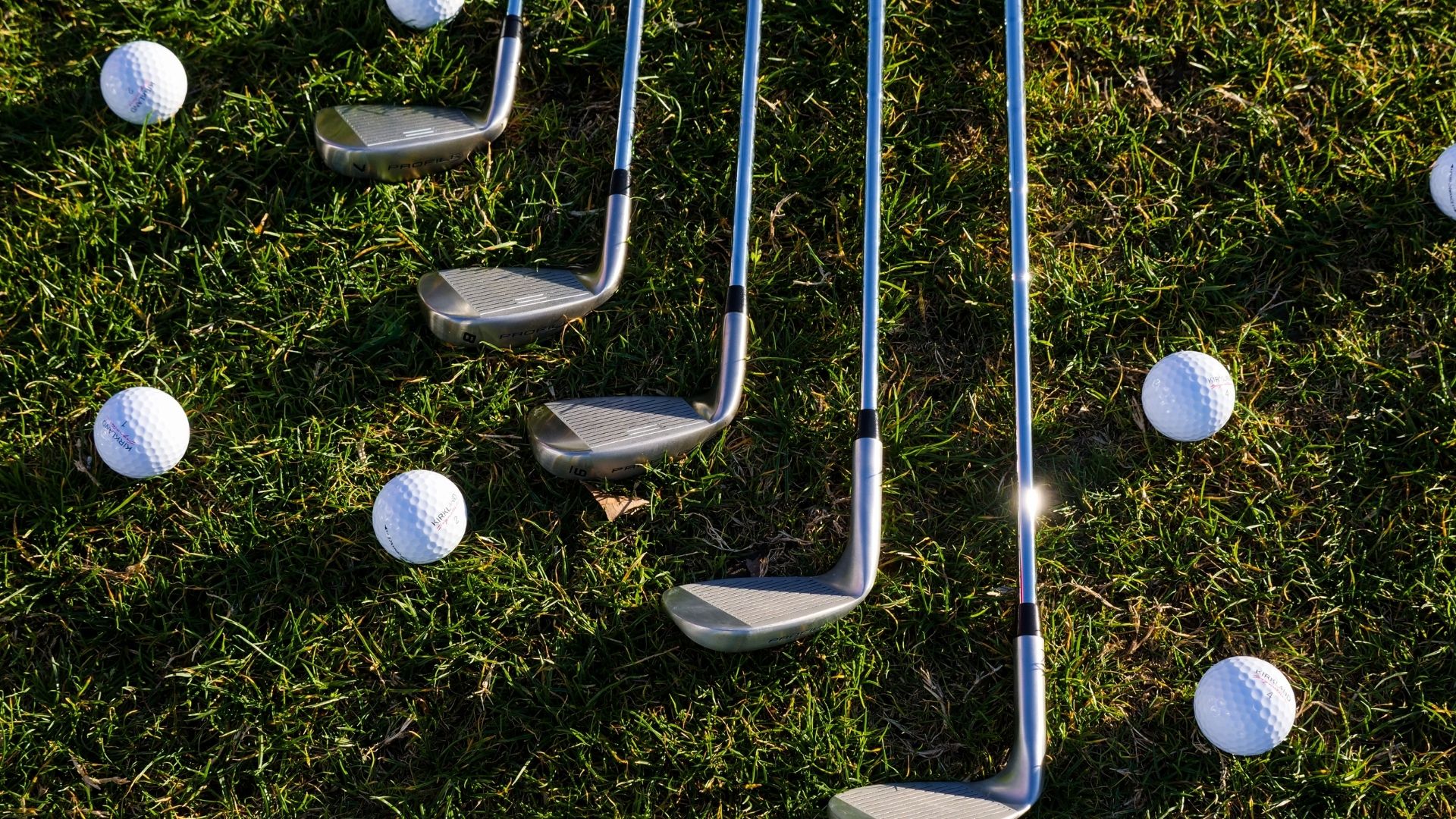
Golf clubs – names, types, and uses. What to hit for what distance?
Club engineering: why as many as 14 clubs?
The rules of golf allow a maximum of 14 clubs in the bag. To a layperson this may seem excessive, but the engineering of this sport is based on mathematics. Each club is designed to send the ball a different, precisely defined distance.
The key to understanding how they work is the concept of loft (the angle of the clubface). The lower the loft and the longer the club, the farther and flatter the ball flies. The higher the loft and the shorter the club, the shorter the shot, but the ball rises higher and stops faster on the grass. So your goal is not to learn 14 different swings, but to master one swing that—thanks to different clubs—gives you 14 different outcomes.
1. Woods: Long-range artillery
At the top of the distance hierarchy are Woods. Once made of persimmon wood, today they are technological masterpieces of titanium and carbon composites.
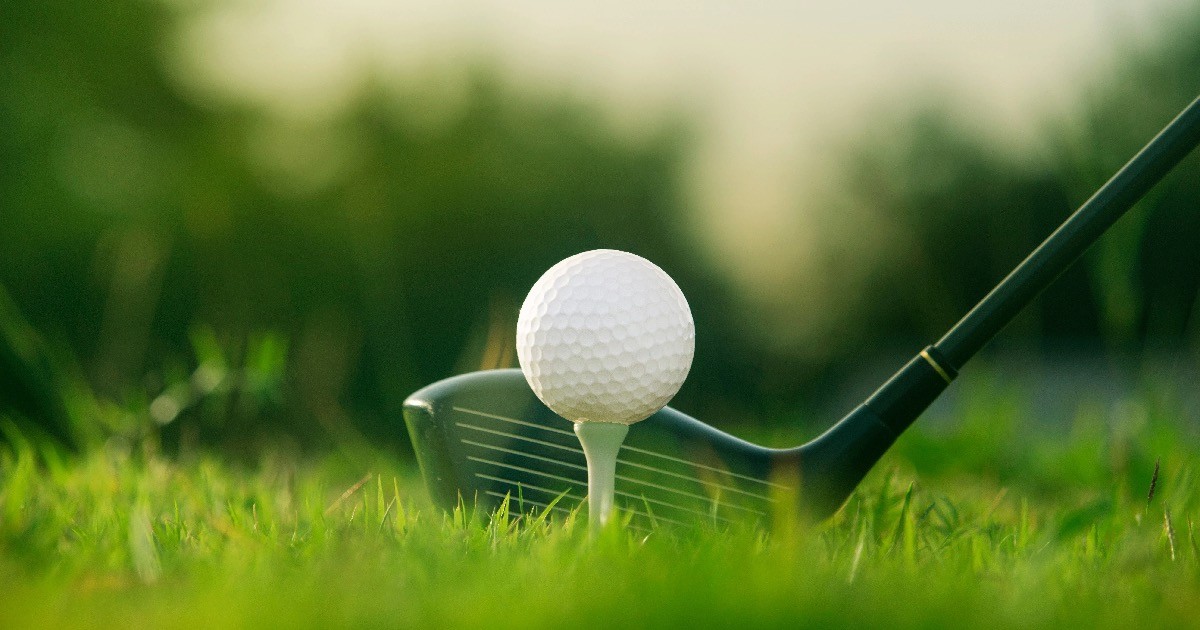
The king of the set is the Driver (1-Wood). This is the club with the largest head and the longest shaft, but the lowest loft (usually 9–12 degrees). It is used almost exclusively for the first shot on long holes (Par 4 and Par 5), when the ball is set on a tee peg. Its task is to maximize distance, which for an amateur means a result in the range of 180–230 meters. However, the driver is the least forgiving club— the slightest deviation at impact results in significant ball flight curvature.
The complement is Fairway Woods (most often the "3" and "5"). They have smaller heads and a flatter sole, which allows effective striking of a ball lying directly on the grass (the fairway). They are indispensable when a very long distance remains to the green, as well as on tee shots on narrower holes where using a Driver would be too risky. A 3-Wood typically offers a distance 20–30 meters shorter than a Driver, while providing slightly greater control.
2. Hybrids: Rescue technology
Hybrids, often called Rescue clubs, are a structural combination of a wood and an iron. They revolutionized amateur golf over the last two decades, replacing hard-to-hit long irons (No. 3 and 4) in bags.
Their construction features a lower center of gravity, which makes it easier to launch the ball upward. They are the "Swiss army knife" in a golfer’s bag—excellent for shots from taller grass (the rough), where a traditional iron might get stuck. For a player with average swing speed (Club Head Speed), a 4 or 5 Hybrid will be much more effective and consistent than the numerically corresponding irons, offering distances around 150–170 meters with a much softer landing.
3. Irons: Precision in the mid-field
Irons make up the largest group in the bag, usually covering numbers 5 through 9 (sometimes from 4). Here the rule is simple: a higher number means a shorter shaft, a greater clubhead angle, and a shorter distance.
Sets are conventionally divided into three sections. Long irons (3-4) are now rare in amateur bags, giving way to hybrids. They require high precision in striking the so-called sweet spot. Mid irons (5-7) are the set’s "workhorses." They are used for fairway play at distances of 130–160 meters and for tee shots on Par 3 holes. A special role is played by the 7-Iron, often treated as a reference club during learning and fitting.
The group is closed by Short irons (8-9). Their task is a precise attack on the flag from distances of 90–120 meters. Thanks to high loft, a ball struck with a "9" drops steeply and does not roll far after landing, allowing you to aim directly at the green.
4. Wedges: The scoring zone (Short Game)
When you get within less than 100 meters of the green, Wedges come into play. These are specialist clubs with the highest lofts, designed for control, spin, and play from difficult lies.
The foundation is the Pitching Wedge (PW), usually included in an iron set. This is a club for shots of about 90–110 meters and for longer chips. Another essential element is the Sand Wedge (SW). It has a wide sole (bounce) that prevents the club from digging into sand, making it the ideal tool for getting out of a bunker.
Advanced players supplement this set with a Gap Wedge (GW), which fills the distance gap between PW and SW, and a Lob Wedge (LW) with an angle of up to 60 degrees. The latter is used for spectacular, high "lob" shots that stop the ball almost at the landing point—useful when you need to carry an obstacle and stop the ball quickly near the flag.
5. Putter: The club you use most often
There is a saying: "Drive for show, putt for dough" (Drive for show, putt for money). The putter is the only club not intended to lift the ball into the air, but to roll it precisely along the grass into the hole. Although distance is not the key parameter here in terms of range, distance feel (power control) is the most important skill on the green. With a putter, you will statistically make about 30–40% of all shots in a round—more than with any other club.
Distance map (Cheat Sheet for amateurs)
The table below presents approximate carry values (in-air distance) for recreational players. Remember, these are averaged figures—your actual performance may differ depending on gender, age, physical fitness, and technique.
Club type | Designation | Loft (approx.) | Distance (Beginner) | Distance (Intermediate) |
Driver | 1-Wood | 9° – 12° | 170 – 200 m | 200 – 230 m |
Fairway Wood | 3-Wood | 15° | 150 – 180 m | 180 – 210 m |
Hybrid | 3H / 4H | 19° – 22° | 140 – 165 m | 165 – 185 m |
Mid Iron | 5-Iron | 24° – 27° | 135 – 155 m | 155 – 170 m |
Mid Iron | 7-Iron | 30° – 34° | 115 – 135 m | 135 – 150 m |
Short Iron | 9-Iron | 38° – 42° | 95 – 110 m | 110 – 125 m |
Wedge | PW | 44° – 48° | 80 – 100 m | 100 – 115 m |
Wedge | SW | 54° – 56° | 50 – 70 m | 70 – 85 m |
Club selection strategy: not just distance
Beginner golfers often make the mistake of looking only at yardage. If the flag is 150 meters away, they automatically reach for the "7." Meanwhile, a professional approach requires analyzing three factors: Distance, Lie (ball position), and Obstacles.
If the ball lies in thick grass (rough), using a long iron or wood will be a mistake, because the grass will wrap around the shaft and close the clubface. In such a situation, it is better to choose a hybrid or a shorter iron, accepting less distance but gaining confidence in escaping a difficult situation. Wind works similarly—a shot into the wind may require taking a club even 2–3 numbers longer (so-called club up) to compensate for air resistance.
Also important is strategy Course Management. Sometimes it is better not to attack the green from a difficult position with the longest possible club, but to play safely before the hazard (lay-up), leaving yourself a comfortable distance for the next shot with your favorite wedge.
How to build your own distance map?
Online tables are only a starting point. To play consciously ("Level up your game"), you need to know your numbers. The worst strategy is assuming you will hit your "shot of a lifetime." If one out of ten attempts with a 7-iron goes 150 meters, but it usually lands at 135, then 135 meters is your real distance.
At home or on the driving range, it is hard to assess distance precisely to the meter, especially considering the quality of practice balls. This is where technology helps.
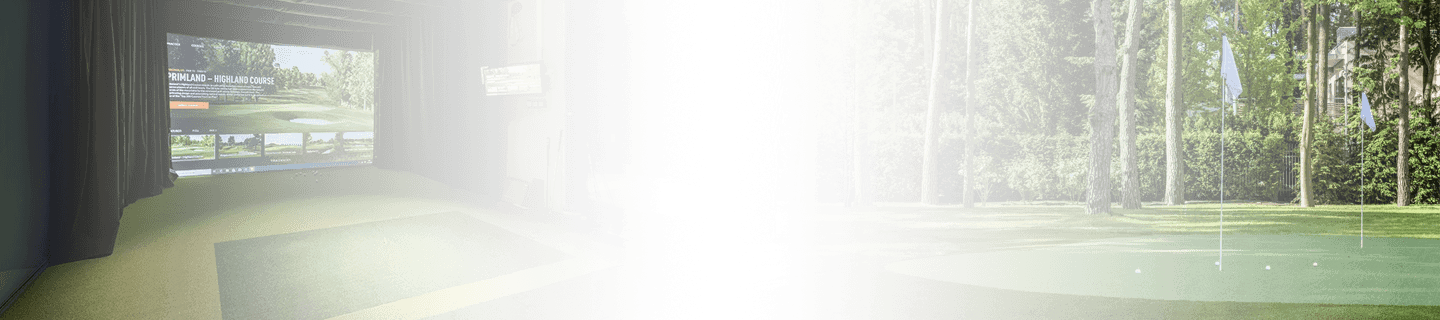
Accurate Gapping (distance measurement for each club) is best carried out in studio conditions. Our simulators equipped with Trackman radars eliminate the impact of wind and range-ball quality, providing laboratory-grade data on your Carry Distance and Total Distance. A one-hour simulator session will let you create a precise chart for your entire set, so on the golf course you can make data-driven decisions rather than guesses.

Level up your game
Let's meet
Design office:
1 Górnośląska St.,
00-443 Warsaw
Showroom:
Golf green - book an appointment
Chabrowa 2 St.,
62-053 Borkowice
Write
Email address