
Golf etiquette in business – how to build relationships while playing?
However, a certain problem arises. The golf course is a merciless mirror of your character, social poise, and personal culture. Poor etiquette can irreversibly ruin a promising deal, while impeccable manners can earn you the respect of the most important players in the industry.
Playing in front of a key client can generate immense pressure, especially when you still do not feel confident in your skills. Before we move on to how to discreetly handle this stress, master the iron rules of business savoir-vivre that you need to know before stepping onto the first tee.
Before the first shot: First impression
In business and in golf, there is no second chance to make a first impression. Before you even take a club out of the bag, you need to show class and respect for your partner.
Be early: Arrive at the club 15–30 minutes before your reserved start time (tee time). This shows respect for your business partner’s time. It will allow you to calmly prepare your equipment, warm up, and greet your guest without rushing.
Understand the dress code: Attire is a test of your attention to detail. A polo shirt (with a collar), chinos, and proper golf shoes are the absolute minimum. Always avoid jeans or casual sportswear. A good practice is to call the golf reception of the course in advance to confirm local requirements.
Leave sales talk in the locker room: The greeting (a firm handshake, eye contact) should be warm and personal. Under no circumstances should you start the conversation by presenting your offer or sales goals.
Etiquette basics on the course: Respect is currency
How you behave on the course is a direct signal to your partner of how you will behave in business.
Pace of play: Time is money. Play briskly and always be ready to hit when it is your turn. A standard 18-hole round should take about 4 to 4.5 hours. Do not irritate your group (and other players on the course) by spending several minutes searching for a lost ball.
Absolute silence and positioning: When your client is preparing to hit, complete silence is required. Do not talk, do not check your phone. Also remember your position—never stand directly behind a player’s back or in their line of sight.
Take care of the “common good”: Repair ball marks on the green (pitchmarks) and fill in torn-out pieces of turf on the fairway (divots). The client will subconsciously notice that you are someone who cares for shared resources and leaves things tidy.
Honesty above all: Do not “improve” your lie in the rough (long grass) and do not underreport scores. Golf is a game of honor. If the client notices that you cheat in the game, they will automatically assume you will cheat them in business as well.
Business on the fairway: When and what to talk about?
The most common mistake of inexperienced managers is moving to business too early (the so-called hard sell). A golf course is a place to build partnership, not for aggressive negotiations.
The golden rule says: do not talk business for the first 4–5 holes. The beginning of the round is for building rapport. Ask about passions, mutual acquaintances, or impressions of the course itself. Introduce business topics organically, no earlier than around the 6th or 7th hole, when the atmosphere is already relaxed.
Never raise difficult issues when the client is preparing for a key putt on the green. Respect their concentration. Also remember your phone—during the round it should be completely silenced. Glancing at emails between shots sends the message: “you are not my priority right now.”
Psychology of the game: Why golf works better than a business lunch?
Why are the world’s biggest deals closed on golf courses? Because, unlike a 45-minute lunch in a crowded restaurant, here you gain several hours of the client’s uninterrupted attention.
Sharing emotions —both the good ones (e.g., a great birdie) and the worse ones (landing in a bunker)—quickly builds a bond of understanding. Golf perfectly reveals character. How your potential business partner reacts to stress, failure, or an unfair ball ricochet says more about them than hours of business interviews. It works both ways—you are also being observed. By showing composure, sportsmanship, and no envy of your partner’s better results, you build the image of a stable, mature leader.
The 19th hole and effective follow-up
A business round does not end after holing out on the 18th. A handshake and removing caps as a sign of respect are obligatory. It is good form to invite the client to the so-called “19th hole”, meaning a drink or a quick meal in the club restaurant. It is there, at the table, in a relaxed atmosphere, that key business declarations are most often made.
The next day, do not forget to close the loop. Send a short, personalized follow-up email: “Thank you for a great round yesterday. I was very inspired by our conversation on the 12th hole regarding project X. What do you think about an official meeting next week on this matter?”
How to build confidence before playing with a client?
Even excellent knowledge of etiquette will not eliminate stress if you lack playing experience. Awareness of your own technical shortcomings can completely dominate your thoughts, taking away the ease necessary for relationship-building conversations. If you are stressed by the prospect of playing in front of an important contractor, do not jump in at the deep end right away.
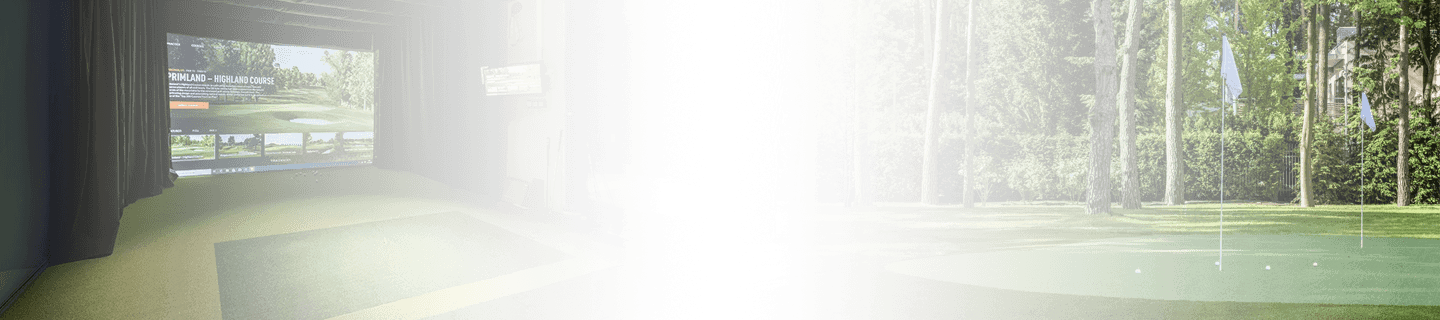
Practice discreetly, in your own office or the comfort of your home, before you go out on the course. Your own golf simulator is a tool that allows you to develop a repeatable swing in private, understand your distances, and get used to the pressure of striking the ball. By building muscle confidence in front of a screen, on a real course you will be able to focus 100% on the client, not on fighting your own club. In business, composure matters—and that comes with good preparation.



Level up your game
Let's meet
Design office:
1 Górnośląska St.,
00-443 Warsaw
Showroom:
Golf green - book an appointment
Chabrowa 2 St.,
62-053 Borkowice
Write
Email address